Sogadu of Rural People "Gadi Mari" The villagers of Manakandur in Sharavathi backwaters recently carried the 'border maari' and performed pooja at the town.
Sogadu of Rural People "Gadi Mari"


Shivamogga:
In hilly villages, the practice of 'Gadi Mari', a true rural tradition of worshiping Goddess Mari, is prevalent.
This 'Gadi Mari' ritual is a part of the belief that when there is a problem such as disease or drought in the village, a wooden idol is made and decorated and worshiped.
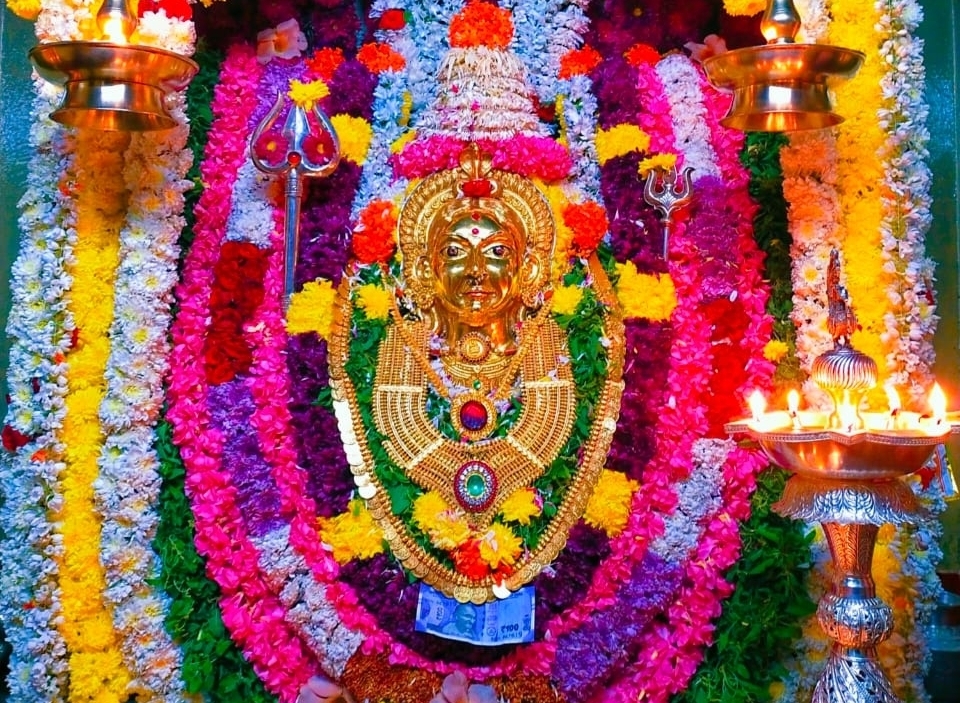
(The villagers of Manakandur in Sharavathi backwaters recently carried the 'border maari' and performed pooja at the town.)
Yes, this is a unique tradition observed by the villagers to rid the village of diseases and evils without temple towers, daily worship and Teertha Prasad. Although it is considered a superstition for the townspeople, it is a strict ritual for the villagers.
These traditions are observed by the villagers according to the season. The celebrations vary from village to village. Badhimaremma Parva is a festival that is celebrated when the villagers are in a difficult time. The villagers of Manakandur say that it is a unique ritual to worship the goddess' Border Mari 'and carry it from village to village to get rid of all the diseases attached to the village.
It is told in advance in the village when the festival of sending the goddess out will be celebrated. The preparations begin in the morning. Agricultural activities will not be allowed during this period. A small chariot will be built as per the advice of the village elders. A wheel is attached to it or in some parts a mandap is tied to two sticks and a wooden handle is attached to it, after which a procession of 'Seedimaremma' is taken out.
In the streets and lanes of the village, old clothes, small pots, old clothes, as well as useless things, green bangles are collected and paraded with the slogan 'Border Mari-Tholagu Mari'. The villagers take the chariot to the border of the village, which is about 2 to 3 kilometers away from the direction of the Mari, take the collected things and worship with devotion in the border area.

In this way, after giving the form of an idol to the diseases and evils of the village, an altar is offered to her. This makes the seller feel satisfied. In some places, cow dung and cow dung are offered as offerings, while in others, cow dung and cow dung are offered as offerings.
Then they return to their village, sighing that the curse and diseases that were attached to that village have gone with Mari. After a few days, the neighbouring villagers parade the goddess who has migrated to the border of their village and bring back the old things with them to the border of their next village. The villagers believe that she travels from the border to the border and takes away the diseases in the villages.
Many doubt where it will end, as it is believed that no one should look back after being transported from one village to another. It is customary to believe in the gods in the mountainous region. Nowadays, even among those who call such rituals superstition, the coming together of all the people in the village to perform a ritual has strengthened the plurality. Padmaraj of the village says that by doing this, the ritual and faith continue in balance.
Belief in suffering if not worshipped:
The villagers believe that such farmers will suffer when the puja is not performed at the border. So, they tie a new saree to the god on the side of the road, pray to the goddess of the sanctum sanctorum, and pull the god on the road on a small cart and send him to the border of the next village. It is believed that when God goes, he should take this goddess along with his paw.
Addional Information:
All Rights Reserved by
smkformedia@gmail.com


ಕಾಮೆಂಟ್ಗಳು
ಕಾಮೆಂಟ್ ಪೋಸ್ಟ್ ಮಾಡಿ